How to Leave a Comment on Our Blog

HOW TO LEAVE A COMMENT ON THIS BLOG
1. Scroll to the end of the post.
2. Click on the phrase "0 comments" or, if there are comments it will indicate how many, for example, "8 comments." Clicking on this will open the comment option for you.
3. Type in your note.
4. Choose your Profile. If you don't understand the choices under Profile then choose Anonymous but PLEASE type your name and location at the bottom of your comment so I know who you are!

Tuesday, March 19, 2013

Birthday boy


"How old would you be if you didn't know how old you are?" ~ Satchel Paige
   To the right on this blog you will notice Les' countdown to his State Pension has wound down to all zeroes! Today Les is 65 years young.


Five year old Les with his dad. This picture was taken at a pub alongside the Thames on Kew Bridge.


   The photo was taken using wet glass photography--one of the first means of capturing photographic likenesses, it was done with a very large, black camera with a cloth over it, like the one in the picture to the right.  This process eventually ends up with the photo adhered to a piece of glass. Les' pictures have weathered hard over the years as you can see below, so we were quite pleased to capture a copy with Les' new touch phone camera. Yes, Les is coming to grips with touch phone technology!

   We started our day with coffee, tea, and birthday cards. Les opened his present while we listened to classic Beatles tunes. At his request a deluxe carrot cake was made with an addition of rum soaked sultanas and pecan bits, frosted with a delicate layer of cream cheese icing. 
 And amazingly enough although Les does not like Chinese food, he loves my homemade Chicken Chow Mein and requested it for his birthday dinner. 
For a tour of Les' childhood in Paddington, London you can visit an earlier blog post dated Saturday, December 19, 2009. Happy birthday my best beloved. It is lovely to share this day--and this life with you!


Saturday, March 16, 2013

Recent exchanges with C.& R. T. Serious reading with no pictures.

I do not usually e mail any authority be it press, government, BBC(disgruntled Tunbridge Wells) etc. you get the picture. Anyway maybe the coming of age  -have you noticed how quick the countdown on the right has gone-  has stirred something and as i was so pis  annoyed by the mooring notice on the Wendover that I e mailed Canal and River Trust.
Notice I don`t actually state how long was our pleasant time although it was hinted in the 3rd line although for the record we admit nothing.
                ------------------------------------------------------------------------------------------------
From:lesbiggs1948@hotmail.co.uk
Date: 07/03/2013 19:31:39

CRT

I have recently spent a pleasant time on the Wendover Arm. The only suitable place to moor is at the present end of navigation along the concrete edging. I noticed it was 48hrs!! Why?

This is a very quiet spot and merits at least 72 hrs and more in winter. Variations of time allowed happens on parts of the system at different times of year. Braunston comes to mind and look how popular that area is yet you allow 14 days over the winter back to 48hrs in summer. Understandable and very sensible.

While on the Wendover no other boat tuned up so if busy Braunston has 14 days why not allow more on the Wendover in winter.

Another point is I notice in your S E mooring consultation you state an intention of;
2 days in any one visit; 8 days in any one month.

So my question is; How does allowing a return to the same mooring 4 times a month encourage continuous moorers to become continuous cruisers?

Perhaps if a boat went back and forth between Berkhamsted (7 days, 14 days per month) with a short hop either south or north of the 2 places a continuous moorer would be following your guidlines.

2 days Wendover
down to Berko say 3 days
down to Bourne end 11 days on a 14 day mooring
back to Berko 7 days
back to Wendover 2 days
back to Berko for the last 4 days of the months allowance
back to Wendover for the 3rd of 4 allowable visits in the month

The month has gone and it all starts again for the folowing months allowance and all within 9 miles.

Les Biggs
Nb Valerie 513386 http://boatlife.blogspot.com It might be of interest to the readers.
        -------------------------------------------------------------------------------------------------------
Now ok we all know the rules for a continuous cruiser re an ongoing journey passing into a new district etc. but I was annoyed that CRT are giving a reason/excuse for the `non compliant continuous cruisers` or as we call them continuous moorers to spend their time going up and down a small stretch. "well guv i`m just using up my mooring allowance"
I know of boaters that spread their cruising over a good many miles returning to the same area after a decent absence because that is what they need to do. Personally I see no problem there, what gets me is seeing the same boat and pile of junk on the towpath sat in the same place for months on end.
       ---------------------------------------------------------------------------------------------------------
From: Customer Services [mailto:customer.services@canalrivertrust.org.uk]
Sent: 08 March 2013 12:12
To: lesbiggs1948@hotmail.co.uk
Cc: Julia Moore
Subject: RE: S E visitor moorings

Dear Mr Biggs

Thank you for your email. I have forwarded your enquiry to Julia Moore who is dealing with the Mooring Consultation so should be able to respond to your questions.

Kind regards
Helen
Customer Service Advisor
Canal & River Trust
-----------------------------------------------------------------------------------------------------------------
Ok sounds good, it`s being forwarded on for an answer.
-----------------------------------------------------------------------------------------------------------------

From: Julia.Moore@canalrivertrust.org.uk
To: lesbiggs1948@hotmail.co.uk
Subject: RE: S E visitor moorings
Date: Tue, 12 Mar 2013 15:13:19 +0000
Mr Biggs
Thank you for your e-mail. As you will be aware, we are currently holding a consultation regarding South East visitor mooring sites. The closing date for responses has now passed, but I have asked if your comments could be added to the feedback for review at our workshops next week.
Many thanks
Regards
Julia
Julia Moore
On behalf of the Canal & River Trust
----------------------------------------------------------------------------------------------------------------
No No. I am not asking for a late entry to be accepted via the back door.
-----------------------------------------------------------------------------------------------------------------

From:lesbiggs1948@hotmail.co.uk
Date: 12/03/2013 17:23:54

Hello CRT

I really would rather have an answer to my concerns rather than them being reviewed at your workshop.

My e mail was not a direct response to your mooring consultation but a concern of what might happen if certain parts of it were instigated and I feel it warrants an answer from someone of a managerial position.

I have made a serious point and would rather it not risk being cast aside by a workshop of volunteers unless of course volunteers are now deciding CRT guidelines to cruising.

With respect,
L Biggs
----------------------------------------------------------------------------------------------------------------
Maybe that will get an answer.
----------------------------------------------------------------------------------------------------------------
Dear Mr Biggs,
Further to your query below:-
- The 2 days stay was put forward by Wendover Arm Trust as a proposal. It does look somewhat ‘tight’ and I suspect that 7 days is more what is ultimately implemented
 
- The return frequencies have been constructed recognising the potential revisit behaviours from a range of boaters – hire boaters could revisit every week, leisure boaters differently etc
Given that we have not got return protocols in place at all currently we now have a framework that looks like it could work fairly for the majority of boaters
 
The existing behaviours of the worst non movers is certainly not accommodated by these thresholds – also the continuous cruising rules are not only defined by revisit to any one particular location.
 
They are defined more by a ‘locality’, which , by definition would cover a wider range
- The consultation will be an opportunity to take account of broad based feedback on these issues – this will inevitably result in some adjustments being made
 
- We are also receiving support for the visitor mooring proposals to only cover summer months as opposed to all year round – this might well be a way we progress a) it recognises the concerns you raise, b) it opens up the possibility of Winter moorings better and c) it avoids the need to monitor out of season (which we would struggle to do)
 
All of the above comments are subject to how we assess our situation in the next few weeks following the analysis of the consultation feedback. We have received much comment to the consultation & we will need to take a representative amount of time to consider the best way forward as a result
I hope my comments help in answering your questions below
Jeff Whyatt
Snr Waterway Manager
South East
      ---------------------------------------------------------------------------------------------------------
So if the Wendover Arm trust have proposed the 48hrs and Mr. Whyatt thinks 7 days will be implemented why are the mooring proposals listed in the wording below by CRT?

The second paragraph puzzles me.
 
Holiday boaters are usually on a mission, as far and as quick as possible in their 1/2week break so will not be making multiple visits.
How does a leisure boater use his 4 times in a month allowance without breaking the C/cruising rules?

Reading down further it appears they are looking to do less monitoring during the winter.(point C)
Point B i`m not sure of. Does it mean that visitor moorings will be less time restricted and therefore CRT can fill them with winter moorings? or is the age thing kicking in again and I`m getting paranoid.
No Mooring from Br 1 to Tringford Pumping Station Narrows. 2 day moorings from Pumping Station to the winding hole west of Br 3 (towpath side only). No Mooring offside from Pumping Station to beyond the winding hole. Improved visitor mooring information required at junction with Grand Union mainline. 2 days in any one visit; 8 days in any one month

Anyway peoples as I have said on here in the past and also on waterway forums the way other boaters read the rules and therefore cruise or not is of no concern of mine. I have been fortunate to have retired early and have no problem complying with the rules. Some may say i`m wrong and should report things from non licensed boats to overstaying but I strongly believe in the saying " there but for the grace of God go i".

I know of many folk in circumstances that dictate their cruising habits(work etc.) and I could have been any one of them if my path in life had been different. We have a landlord from whom we rent the use of the waterways from and I believe they should be the ones to enforce the rules. I don`t stand at the side of the road with a speed camera so why should I patrol the towpath?

So why then did I bother with the e mail in the first place? Perhaps as I said earlier just an age thing or because I could. Although as I sit moored on a muddy towpath with traffic across the field going by, with housing although set back still not as nice a view as fields. It`s near to a busy town centre, 5 mins walk to pubs and restaurants and the same distance to a train station into London. A very busy place and because of the facilities it`s popular with many boats wishing to moor. So what do they do (CRT) yes correct it`s a 14 day mooring! So even during this time of year you are lucky to find a space and all the moorers are just boaters like us moving within the limits.

As always comments welcome even if you think i`m wrong. Just say so politely and as firm as you wish and I will publish your words.

Friday, March 15, 2013

Cow Roast and Dudswell locks. Then and now.

We spent a couple of days at Cow Roast then decided to move on. As we took on water by the lock I tried to re-create the old picture from the Gerald Massey site. Owing to the private moorings now occupying where the old working boats are moored I am closer but you can see not much has changed over the years.


Cow Roast lock 2013


©http://gerald-massey.org.uk/canal

The first of the Dudswell locks No.47, just back around the bend, was a joyful sight with lots of wood to be cut from two fallen trees. Jaq brought the boat up to the lock on the offside and we spent an hour with the chainsaw.
Above and below pictures of  Dudswell lock 48 on the Grand Union with quite a few years between.


©http://gerald-massey.org.uk/canal
The small wooden building has been re-placed by a sturdier looking one. Also in the old picture one of the two buildings further along the lane appears to have been removed.
I would guess the horses liked all the locks being so close together as it gave them a lot of breaks from pulling those boats.
Just a few locks on and we spent 3 days in Berkhamsted after which we needed to seek peace and quiet away from the town but it served it`s purpose with supplies and a few wants loaded  aboard.

Tuesday, March 12, 2013

Wendover Arm restoration

The Wendover Arm was opened in 1797. It was originally built as a feeder to bring water from springs at Wendover to the Grand Junction canal main line. It was decided to make it navigable and was busy serving wharves along it`s 6.5 miles. Many failed attempts to stop leakage ended in the canal being closed to boats in 1897.
The Wendover Arm Trust formed in 1989 completed phase one from the stop lock to the present end of navigation in 2005. This included the Little Tring bridge build.

This is the winding(turning) point on the Wendover. Straight ahead is filled in and is used as storage by the Trust. It is also the access point for the machinery used in the restoration work.

This is the storage/access area used by the trust. Towpath is on the right and the muddy canal bed can be seen. Easy access to this point is from the new bridge at the winding hole just walk past the houses and you will see the entrance a very short distance past the last house.

The equipment has to travel through deep mud to reach the work site.

The sides are shaped in sections of about 70feet , both sides remember.

Next the self sealing  Bentomat liner is fixed in place and rolled down the slope.

The liner can be seen here on the last section worked on. The liner being laid above is a continuation of this section.  The liner comes down both sides and across the canal bed. The bed is then covered as can be seen on the right. Those blocks on top of the earth bed are the bottom course that the concrete bricks are laid upon. On top of the bricks is laid Coir Rolls to hold up the grassed bank.

This is the previous section to that above and you can see the length of the section last completed. 
 
A finished section complete with visitor moorings. In this Wendover Trust working party newsletter can be found some interesting figures in the progress report section.

Bridge 5. Just beyond this bridge are the steps to the church.
The Parish church of St. Mary the Virgin, Drayton Beauchamp restored and partially rebuilt from the previous structures. It can be accessed via steps from the towpath.
 
Just past the steps to the church is the point the canal has been re -routed. In the picture on the right the old route is to the right through the trees. Ahead on the left can just be seen the reason for the diversion the bridge carrying the road that by passes the small towns and villages in the area. While constructing the road Saxon graves were unearthed. Just beyond the new bridge the old and new sections merge and a winding hole has been created.

Sunday, March 10, 2013

Part 2

Going to try and include more pictures of the canal for folk back in the U.S. so they can get more of an insight into the life of Jaq nowadays.

The decision to move away from the reservoirs was made after 8 days. Family had come back and forth and now we were to go into Luton on the bus to have dinner with family without transport at the moment. In the past - this might be useful to other boaters - the 61 bus ran past the White Lion and the Bluebell tearooms and provided a link to Luton, Aylesbury and Tring hourly. Now the 61 has been routed via Bulbourne and the 164 runs through Marsworth 2+ hours between buses. So being near the Bulbourne end makes it easier especially returning after dark.
As it happened son Kev gave us a lift back when he finished work, thanks son.
The cottage part way up the lock flight was recently sold and now has an extension on the back. In case anyone is interested this is where you can spot at least 3 old working boats taken out on the Wendover arm and slid down the incline to rest just past the cottage. Just walk past the cottage and look through the trees. Better in winter before the trees hide them away.


A recently fitted new set of lock gates but still slightly leaking. The gates weigh about 3.5 tons each and are made of British Oak. Canal River Trust have about 1600 locks to maintain and this year 173 gates will be replaced across the system. A lock gate has a life of 20/25 years.
This is the top lock 45 on the map (see last post) just near to point C. I am taking the picture from the bridge over the Wendover arm Junction ( see 2nd picture below).

Just a half mile on from the lock we filled with water and turned the boat . We are moored 3rd boat on the left. The bus we need runs just behind from where I have taken this photo.

So after a couple of nights we make the short journey back to the junction by the top lock. This area was the location for part of the 1964 film `The Bargee`. The building, bridge and lock all appeared in the film. http://youtu.be/CdNj4_iDpzg


This time we turn under the bridge into the Wendover arm. I think the guy on the bridge had his doubts about me getting round in one go as he gave a nod of approval as I passed below him.

The modern day view of Heygates Flour Mill. Below the same scene when part of the site was occupied by Bushell Bros. boat builders.

©http://gerald-massey.org.uk/canal

http://www.hertfordshire-genealogy.co.uk/data/places/places-t/tring/tring-new-mill.htm
Next to the Mill, where the tree is, there once stood a Windmill built in the earl 1800`s and demolished 1930. In those days the mill would have milled a half ton per hour. Now Heygates mill 100,000 tons each year, about six tons per half hour. Bushell`s yard was here from 1875-1952 and replaced an earlier boat repair business started in 1850. Heygates can be seen on the map in the bottom right side on the way to point D.
 
 
Further along the Wendover arm is little Tring bridge number 3 built in 2000 by the Wendover Arm Trust. The original built around 1797 was demolished in 1973 and the road past across the canal bed on the level. The canal at this time was dry with a dam near to the pumping station being the limit of navigation.
The new bridge is concrete and is brick faced to match the original. It is also wider giving more room on the roadway it carries. So now we are at point D  the end of navigation on the Wendover arm and will moor just through the bridge.
A lot of work to re open the 6 miles or so into Wendover is taking place. More on this next time.

Thursday, March 07, 2013

Marsworth and the reservoirs part 1

Coming down the Grand Union canal is mostly rural with decent size gaps between civilisations. Over the years of my solo boating here and Watford were destinations each year because of family connections. Arriving here to me always marked the end of open countryside and the beginning of suburbia. From now on places like Berkamstead, Hemel Hempstead, Watford etc. having expanded leave little of the open fields that are plentiful north of here. I make it sound as though we are travelling through a large city day after day but those familiar with this life will know what I mean and to those less knowledgeable of the area there are still some peaceful moorings between the madness called living on land.

So we have arrived at Marsworth at point A on the map having passed through Manchester, Stoke on Trent, Coventry and Rugby to name a few. All busy places but miles of beautiful, quiet moorings in between. Just below `A` is the Aylesbury Arm junction where the new housing I commented on a few days back is being built.
From Marsworth to Paddington (London) our destination via point C is 46 miles and 52 locks. According to CanalPlan this can be completed in 4 days BUT you need to travel 6 hours a day, I don`t think so.

We arrived at point B pictured above on Feb. 19th. This is in the summer a very busy mooring but as you can see we share with just one other boat. The reservoirs are just to the left. This was to be a week long stay to receive visitors and family.

Marsworth reservoir and in the distance Startops, our boat is just to the right of the trees.
 
Marsworth is full but the excess is running into Startops that although very high still has a lot of capacity.
The reservoirs are connected to Tringford pumping station on the Wendover Arm via underground culverts. Marsworth had it`s own pump in 1810 located on the Wendover Arm but when Startopsend was built it was no longer needed. It then was used to feed excess water from the summit C into Marsworth reservoir.
Interestingly nowadays Marsworth water can not be pumped but can be fed by gravity into the canal below the bottom lock via a stream alongside the car park + into Startopsend. I assume they can pump water into it but not from it. 
The workings of the reservoirs is an interesting subject but I have not found a site that goes into great detail and have had to be satisfied with bits from various sources.
 
One source was the charity Friends of Tring reservoirs and I cut the following from the site.
British Waterways measures reservoir capacities in millions of litres (megalitres, or ML). One megalitre is equal to 1,000 cubic metres of water, or 220,000 gallons, approximately four standard locks of water. Wilstone is the largest of the reservoirs, with a capacity of 1,102 ML. Startopsend is considerably smaller, at 482 ML and the two remaining reservoirs are smaller still: Marsworth is 236 ML and Tringford is 172 ML. As a very rough approximation, I often think of Wilstone as the largest, with Startopsend about half the size of Wilstone, Marsworth about half the size of Startopsend and Tringford about half the size of Marsworth.
 
So calculators out....hold it the magic phone has a calculator.
Let`s take Marsworth as it`s full and flowing into Startopsend.
236ML x 220,000 = 51,920 Gallons. Divide that by 4 =12,980 wide locks of water.
Hope that is correct if not blame the virgin smart phone operator.

There are 5 reservoirs in the Tring group -add Weston Turville to the 4 on the map - and Canal River Trust`s latest figures show 3 of the 5 at full capacity. Tringford is 86% and Startops 67%. They have all 5 together a capacity of 7,110 Mega litres , wow work that one out, but only 80% is usable (Ecology and SSSI requirements).

The wildlife  turned their back on us so we decided it was time for a change of scene but more of that in part 2 when C, D and E come into play.


Tuesday, March 05, 2013

Solar power


Just sitting here looking up some stuff for a blog and the sun is shining.
Jaq is on her laptop opposite me. So I`m thinking before we go out for a walk let`s see how the solar is doing.
We have;
 2 laptops plugged in and charging.
The fridge is on.
I have switched on the TV and Skybox. (part of test)
All running off 12volt. The battery reading is 13.5. Switch ALL off and the battery reading is 14.6. The engine has not been run. I love solar. If the wind genny had still been on the roof it would have generated zero.

Monday, March 04, 2013

They say it`s progress

I have been meaning to sort a new phone for a few months now and as the picture shows the deed is done. My old Motorola served me well with it`s folding design keeping the screen protected from being squashed in my pocket up against a lock beam, they end up like a Rainbow leaving you guessing what function you are performing.
So now I have entered the world of smart phone technology with the Android Samsung Galaxy 2. The little quick start guide is useless and the online version is not much better. This phone shows my email as it arrives, has GPS maps, radio, news and weather, voice command - how do I command it to make a bacon sarnie- it has a million other useful/useless gadgets. Ooops sorry they call them Apps. Oh by the way it also makes phone calls.
It has god knows how many hours of life between charges but I managed to flatten the battery within a few hours trying to work it all out. It took  Jaq and I about 40 mins to delete the weather from being displayed every time I picked the phone up, just how many times a day do you need the weather forecast in one day.
So I guess your wondering what sort of deal I got.
400 mins,  300texts,  500Mb data, unlimited landline calls and best of all a free phone. £16/$24. All this is more than enough for me as I never use anywhere near my allowances. If I had to buy the phone I would not have been happy but as it is perhaps in time it will grow on me but for sure I`ll never use all the gadgets.
I have managed to find a nice genuine leather case that will give it some protection. Nowadays I quite often don`t have the phone on me while cruising unlike my solo days when it never left my side...just in case.

Saturday, March 02, 2013

The Last GREAT race!!

  It is time again for The Last Great Race to begin! Every  year I follow the Iditarod Sled Dog Race to Nome, Alaska; a trip by dog sled over vast, difficult terrain including desolate tundra, dense forest, snow scoured mountains, and the frozen edge of the Bering sea, some 1490 miles (1688 km). It is grueling, dangerous for the humans far more than their canine companions, and will test everyone's endurance. Dogs and their mushers must work together as a solid team in order to survive. The dogs are the stars in the Iditarod and they are why I follow it. Those who know me well, are aware that I have no passing fondness for canines. But I have great respect for working dogs--who actually work for their keep, and even more for Alaskan sled dogs--who do their work in some of the worst terrain and weather in the world.

   James Kari, Assistant Professor, University of Alaska Native Language Center in 1979 stated: The name Iditarod came from an Ingalik and Holikachuk word hidedhod for the Iditarod River. This name means distant or distant place. This word is still known by elders in the villages of Shageluk, Anvik, Grayling and Holy Cross.”
  This race commemorates sled dog freight and mail carrying in the Last Frontier as well as the famous 1925 serum run when sled dogs and the mushers braved the harsh climate and risked life and limb to deliver medicine to the diphtheria stricken community of Nome and other surrounding communities. All other means of transportation had failed and sled dogs were the only means available to save the citizens of this small native village on the edge of Norton Sound on the Bering Strait. Twenty mushers and one hundred and fifty sled dogs relayed diphtheria antitoxin across the interior of the Territory of Alaska. It took them five and half days.
   There are two different routes: the northern route is run in even numbered years and the southern route is run in odd numbered years. 
   The teams average 16 dogs apiece which means over 1000 dogs leave Anchorage, Alaska at the race starting line. Now days there is a lot of money and recognition given to the winners-the first sled dog team to pass through the burled arch in Nome. This year there are 66 teams of which 14 are women.
   Mushers are allowed to assist each other on the trail, but help from outsiders is not permitted. If any outside assistance is accepted for emergencies, it has to be reported to officials and a penalty may be imposed. The physical and mental demands for mushers are high. Frostbite can set in. Snow blindness, broken bones and illnesses can occur. Lack of sleep can bring on hallucinations. Dogs can make a wrong turn and a team might end up off course, with the musher desperately trying to get the pack to rejoin the trail.
   To ensure the well being of the race dogs, around 37 veterinarians tend to them during the race, and pre-race exams are required. Still, overexertion leads to death for some of the race dogs. 
Susan Butcher and her team
   A host of medical problems can crop up, from foot problems, dehydration and viruses to ulcers, hypothermia and heart problems.  Dogs can find themselves tangled up in a fight with a moose--something that happened to four time Iditarod champion Susan Butcher. She had to withdraw form a race she and her team were winning when several of her dogs were seriously injured by an attacking moose. 
   A seemingly content team of dogs can engage in a dog fight. When a dog team gets tangled up, dogs can be strangled. Dogs can break free of the harness and become lost; microchips implanted in the dogs and collar tags help identify lost dogs (and also assist in keeping track of dogs that are dropped off at checkpoints during the race). Since its inception in 1973 one hundred and twenty dogs have died in this race.
   Many people feel it is unethical and cruel to run dogs so far, so fast. I ask them to please bear in mind these dogs are their mushers bread and butter. I have known mushers personally and I have never seen dogs so well cared for, fed, exercised and respected. Nature and man designed these dogs to run and they literally hate to stand still. A two hundred mile practice run for a dog team of six seems like the equivalent of a humans six mile jog around the park. I've been a passenger in a sled and watched the dogs on a sixty mile journey. They never tired. Every time we stopped to refresh ourselves the dogs ate better than we did and were pulling at the traces and yapping to get started as soon as possible.
    Each team competing in the Iditarod Trail Sled Dog Race is made up of a dog driver, the dogs and a whole lot of gear. The dogs that race in the Iditarod are primarily of a mixed breed, called Alaskan husky, which is not a breed recognized by the American Kennel Club. People sometimes assume the Iditarod sled dogs are Siberian husky or malamute, both official American Kennel Club breeds, but they are not the preferred dogs for most mushers.
   Alaskan huskies are bred for their speed and endurance. Dogs that weigh around 40 to 45 pounds are the ideal size. The most intelligent and fastest dogs are picked to be lead dogs and run in the front of the pack. Behind them run swing dogs, whose job is to direct the team around turns and curves. At the back of the dog team are the wheel dogs or wheelers, who are right in front of the sled and are usually the largest and strongest of the team. The rest of the dogs are known simply as team dogs.
   The training for each team of dogs varies by musher (or whoever is preparing the dogs to race). Conditioning the dogs to run long distances is vital, and teams may cover 2,000 to 3,000 miles in the course of their training leading up to the race. Since training may take place year-round, the dogs sometimes run on dry land, and sometimes pull all-terrain vehicles.
Musher heating up dog food on the Iditarod Trail.
    Sled dogs need to eat around 10,000 calories per day. During the Iditarod race, that translates into about 2,000 pounds of food for one team for the entire race. Meat is the main ingredient, but other fats, oils, dry dog foods and vitamin supplements are also included. The dogs are fed at each checkpoint but they also get snacks every few hours. Before the race, mushers ship food and gear to points along the trail through the race committee so it is waiting for them at checkpoints. Gear for dogs includes fabric booties to protect their feet from the elements, and each team may go through 2,000 booties during the race.
   There are a maximum of 16 dogs on a team. At the race's start there must be between 12 and 16 dogs per entrant. At the race's end, at least six dogs must be part of the team that crosses the finish line. During the race, teams typically travel 5 to12 mph.
   Though competitors may have people who assist with race preparations the rest of the year, when it comes time for the Iditarod, the musher must compete on his or her own. What makes a good musher? Strong leg muscles and good balance help, but mental stamina is clearly required.
   For the race, mushers are required to pack a sleeping bag, an ax, snowshoes, and a cooker or pot and fuel for boiling water. They outfit themselves in attire that will protect them from the harsh elements, including warm boots and eye goggles. Ski poles, a gun, a headlamp and food are among the other supplies carried on the trail.
   Mushers sleep very little during the race. There is a designated sleeping area for the dog drivers at each checkpoint, but other than one 24-hour and two eight-hour mandatory rests, competitors push themselves to stay awake.
   The official race rules require that "some type of sled or toboggan must be drawn" but specifications are up to each racer. Typically, the sleds used weigh around 100 pounds (easily twice that once loaded with gear) and cost around $1,500. They have a basket where gear is carried and a tired dog can rest, and are outfitted with a braking device. Mushers stand on the sled's runners, which are usually made of wood and covered in plastic or Teflon, and extend out from the sled's basket.
   The dogs are attached to the sled with a series of lines called rigging. This includes the tow line (or gang line), tug lines and neck lines. The dogs each wear a collar and a harness. The tow line connects the dogs to the sled. The tug line connects the dogs' harnesses to the tow line. The neck line connects the dogs' collars to the tow line. There are no reins, and dogs respond to the musher's vocal commands.
   Tether lines and stakes are used to secure dogs during breaks. A snow hook or ice hook, a heavy piece of metal that can be set into the snow, is also used to restrain the team as needed. A snub line is a piece of rope that connects the sled to a tree or other object when not in use. (http://adventure.howstuffworks.com/outdoor-activities/snow-sports/iditarod2.htm, accessed March 2nd, 2013.)


   The average cost to run this race is $50,000.00 to run an appropriate dog kennel and breed a team; $10,000.00 for the race entry fee, dog food for the race, dog supplies, musher supplies, and freight. The winner arrives first through the burled arch in Nome with the shortest time and receives $68.000.00 in cash (U.S. Federal taxes apply), a brand new Dodge RAM 4x4v pickup. $600,000.00 is distributed to the top 30 finishers each year, and every musher who finishes the is awarded $1049.00 along with brass belt buckles and special Iditarod patches. The Rookie of the Year Award is given to the musher who places best amongst those racing for the first time.
   The first musher to reach the halfway point in the town of Iditarod in odd-numbered years and the town of Cripple in even-numbered years receives the GCI Dorothy Page Halfway Award and $3,000 in gold nuggets. The first musher to reach the cities of Anvik in odd-numbered years and Ruby in even-numbered years gets a seven-course meal prepared by Alaska's top chef at the checkpoint and $3,500 in one-dollar bills as winner of the Millennium Hotel First Musher to the Yukon Award. The first musher to make it to Unalakleet receives a hand-carved trophy and $2,500 in gold nuggets awarded by Wells Fargo. The musher who crosses the finish line last receives the Wells Fargo Red Lantern Award.
   The golden embroidered harness of the Lolly Medley Memorial Golden Harness award is usually given to the lead dog of the winning team and voted on by the other mushers. Consequently in the 2008 race the golden harness was voted to Babe, lead dog of the third place team. Babe was eleven years old and it was her ninth Iditarod.
   With modern technology, videos are available throughout the race as well as live web cam feeds and one can log in to the official race web page and choose favorite mushers. E-mails will be sent out to you whenever a musher you select checks in and out along the race. There is also an educational tab for teachers who wish to include the Iditarod in their classroom to teach about geography, culture and history.


Iditarod musher Rachael Scdoris
The Story of the Widow’s Lamp
    During the days of Alaska sled dog freighting and mail carrying, dog drivers relied on a series of roadhouses between their village destinations. Since these mushers ventured out in most all kinds of weather, for safety reasons they found the idea that pilots rely on, known today as the flight plan. Word was relayed ahead that a musher and team were on the trail, and a kerosene lamp was lit and hung outside the roadhouse. It not only helped the dog driver find his destination at night, but more importantly, it signified that a team or teams were somewhere out on the trail. The lamp was not extinguished until the musher safely reached his destination.
    In keeping with that tradition, the Iditarod Trail Committee will light a “Widow’s Lamp” at 10:00 a.m., on the first Sunday in March, in Nome at the trail’s end. This lamp, which will be attached to the Burled Arch, our official finish line, will remain lit as long as there are mushers on the trail competing in the race. When the last musher crosses the finish line, officials will extinguish the “Widow’s Lamp” signifying the official end of the Iditarod for that year.

   All too often, public and media think of the race as being over when the winner crosses the finish line, yet there are still teams on the trail. Let it be remembered, Iditarod is not over until the last musher has reached Nome and is off the trail.
   In 2008 and again in 2009 Twenty year old Rachael Scdoris of Bend, Oregon, USA, met the prequalification and finished the race 57th and 45th respectively. She is legally blind and was allowed a visual interpreter on his own sled to travel by her side and warn of dangers she could not see. Born with this congenital disease her vision is 20/200 and she is color blind. She is only too aware of the importance of the widow's lamp--even if she could not see it clearly.

Friday, March 01, 2013

Edited Edition of Have You Been Spotted?

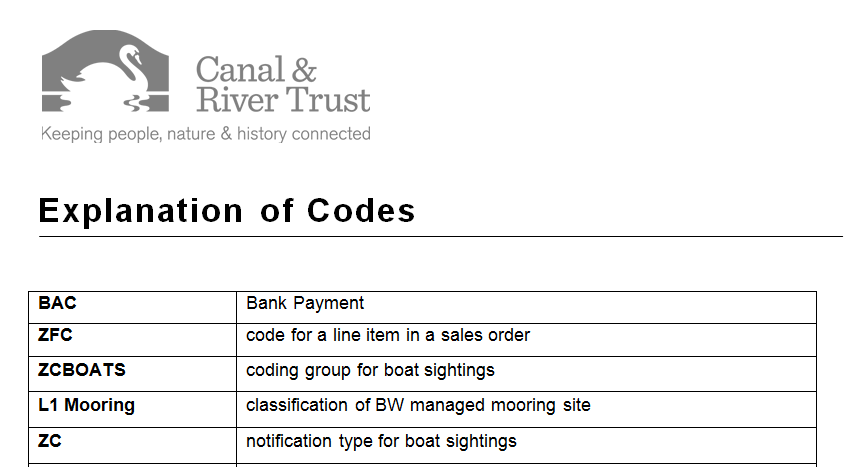
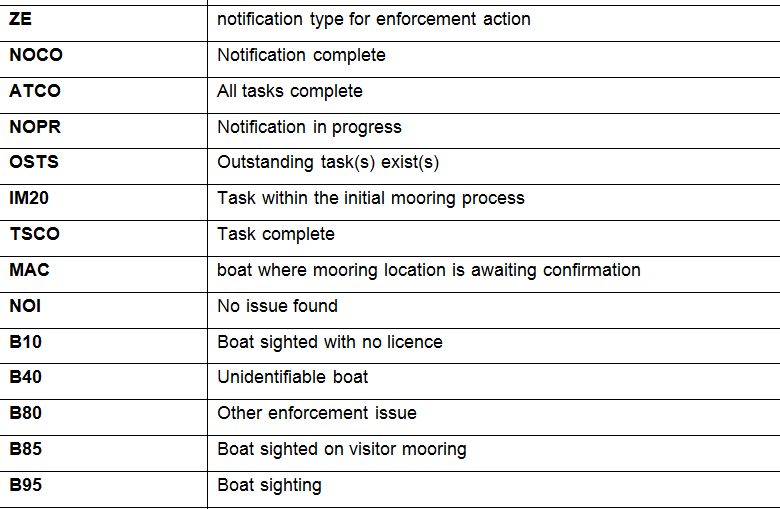
I've used a snipping tool to capture the information sent to me by C&RT. Sorry for the non working links folks.


Below is the list of codes BW and now C&RT use for sightings and boat related issues:

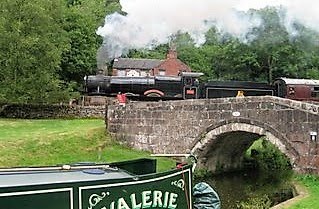
NB Valerie & Steam Train by Les Biggs

NB Valerie & Steam Train by Les Biggs