Click on the link above (I Got You Babe!) to see our anniversary card!
How to Leave a Comment on Our Blog
HOW TO LEAVE A COMMENT ON THIS BLOG
1. Scroll to the end of the post.
2. Click on the phrase "0 comments" or, if there are comments it will indicate how many, for example, "8 comments." Clicking on this will open the comment option for you.
3. Type in your note.
4. Choose your Profile. If you don't understand the choices under Profile then choose Anonymous but PLEASE type your name and location at the bottom of your comment so I know who you are!
Tuesday, June 18, 2013
Sunday, June 16, 2013
Out to Kensal Green
It seems like we have been in London forever having passed through to the Lee and Stort and now coming back on our way to the west of London and our entrance onto the River Thames.
Above Jaq is in charge of the boat whilst I take my turn at locking duty. It was early in the day so this big tourist attraction was quiet with few onlookers.
The whole area was centred on the Interchange building pictured left. This was where boat, road and rail could swop cargoes. As you see the canal went beneath the building and I have read there was room for 18 narrow boats.
With the large rail depot all around horses were a big source of movement not just of boats but also the railway wagons. At times 400+ horses would be working and stabled here. Walking around the market it is pleasing to see this fact has been a big focus point and indeed some of the market stalls are situated in the horse pens.
The problem of getting horses from the stables across the site was made easier by tunnels below ground and some are still here today. Some links might be the easiest way to appreciate the site.
Here Here Here and Here.
Camden visitor moorings have lockable gates at each end. A waterways key is used for access but I`m not sure that they are actually locked each night. Having never boated into London past Paddington I had always had concerns of safe mooring in London. The above might give cause for concern, it did me when reading of it some years back, but I can say that we intend to return into London and moor along the towpaths.
Now this is Kensal Green the site of the old Gasworks. As a kid I lived just 800 yards as the Crow flies from this site. Nothing with the exception of the gas holders is left now but I do remember swimming here as a child. There were two inlets to the works from the canal each side of Sainsbury`s and the process of making gas from coal resulted in the warm water flowing into the canal. The by product was Coke and this was used by most folk to heat their homes on open fires. Every Saturday we kids would get orders for sacks of coke and we would use prams/baby carriages to deliver the orders for pocket money. Just one of many money schemes we had as kids. Now my mind is whirling of the way we spent our earnings. Anyone remember the `Red Rover` bus ticket.
The old water tower survives from the gas works and has an interesting history and it seems future, give it a read. The forecasted value of £4 million does not surprise me in this mad world of property development.
Above Jaq is in charge of the boat whilst I take my turn at locking duty. It was early in the day so this big tourist attraction was quiet with few onlookers.
The whole area was centred on the Interchange building pictured left. This was where boat, road and rail could swop cargoes. As you see the canal went beneath the building and I have read there was room for 18 narrow boats.
With the large rail depot all around horses were a big source of movement not just of boats but also the railway wagons. At times 400+ horses would be working and stabled here. Walking around the market it is pleasing to see this fact has been a big focus point and indeed some of the market stalls are situated in the horse pens.
The problem of getting horses from the stables across the site was made easier by tunnels below ground and some are still here today. Some links might be the easiest way to appreciate the site.
Here Here Here and Here.
The old toll house on the Paddington Arm and we are topping up the water tank and disposing of the rubbish/trash before we move onto Kensal Green for a few days and have guests from America.

Just a few hundred yards further on and a chance to see the school that cast me out into the world at 15 years old.
There it is was behind the wall containing the art created from rubbish gathered out of the canal. As you can see, below, from a picture taken on our last visit it has with out doubt gone.
Now this is Kensal Green the site of the old Gasworks. As a kid I lived just 800 yards as the Crow flies from this site. Nothing with the exception of the gas holders is left now but I do remember swimming here as a child. There were two inlets to the works from the canal each side of Sainsbury`s and the process of making gas from coal resulted in the warm water flowing into the canal. The by product was Coke and this was used by most folk to heat their homes on open fires. Every Saturday we kids would get orders for sacks of coke and we would use prams/baby carriages to deliver the orders for pocket money. Just one of many money schemes we had as kids. Now my mind is whirling of the way we spent our earnings. Anyone remember the `Red Rover` bus ticket.
The old water tower survives from the gas works and has an interesting history and it seems future, give it a read. The forecasted value of £4 million does not surprise me in this mad world of property development.
We first saw Savoy Hill a few weeks back on the Lee navigation.
In the shadow of the now listed Gas holders this will be home for a few days. Talking of gas, I remember as a kid the gas lighting in the streets where I lived. A man with a pole came around each evening and pulled the gas valve open to increase the flame and do the reverse in the morning. Anyone else remember the days when there were so many jobs to keep people employed. Any road works had a night watchman with his brazier burning all night to keep him warm and cook a meal.
Saturday, June 15, 2013
Goodbye King's Cross and St. Pancras
"Life is like riding a bicycle. To keep your balance, you must keep moving." ~Albert Einstein
I know it seems hard to believe given the length of the King's Cross posts but we experienced it all in 24 hours! Yet there is still more to do and see so as Les said in a previous post, "ve vill be back!"
Next time we hope to have dinner at the Filling Station--a refurbished 1960's petrol station perched on the edge of the Regents Canal on Goods Way which has been turned into a restaurant called Shrimpys.
We just missed the partnership with Everyman cinemas in which The Filling Station hosted a one month festival of the best road trip movies. One could book tickets for £16.50 each and watch classics like The Graduate, Bonnie and Clyde, and Easy Rider while feasting on American hotdogs, hamburgers, beer, wine and cocktails.
We will also visit The Foundling Museum, founded by captain Thomas Coram, artist William Hogarth, and musician Frederic Handel to care for Britain's abandoned children, and The Museum of Freemasonry--both a part of Museum Mile which starts in Kings Cross. Of course we will stop first at Kings Cross Visitors Centre to find out What's On!
![]() |
| The Filling Station on Regent's Canal
© John Sturrock |
Next time we hope to have dinner at the Filling Station--a refurbished 1960's petrol station perched on the edge of the Regents Canal on Goods Way which has been turned into a restaurant called Shrimpys.
We just missed the partnership with Everyman cinemas in which The Filling Station hosted a one month festival of the best road trip movies. One could book tickets for £16.50 each and watch classics like The Graduate, Bonnie and Clyde, and Easy Rider while feasting on American hotdogs, hamburgers, beer, wine and cocktails.
We will also visit The Foundling Museum, founded by captain Thomas Coram, artist William Hogarth, and musician Frederic Handel to care for Britain's abandoned children, and The Museum of Freemasonry--both a part of Museum Mile which starts in Kings Cross. Of course we will stop first at Kings Cross Visitors Centre to find out What's On!
![]() |
| Free tote bags, notebooks, maps and information booklets from the King's Cross Visitors Centre. |
![]() |
| Looking back at our King's Cross mooring, right. The Filling Station diner is up past the bridge out of view on the right. The Granary building steps are just at the left. |
![]() |
| NB Valerie approaching the Fish and Coal Offices on the right and Camley St. Park on the left. Around the curve is St. Pancras lock. |
![]() |
| Looking back at the cranes over King's Cross and St. as we come up ST. Pancras lock. |
![]() | ||
The old St. Pancras lock keeper's cottage built in 1890.
BATTLE BRIDGE BECOMES KING'S CROSS
I have been a fan of Queen Boudicca for years. She who fought
savagely against the Romans in an attempt to drive them from the Island.
This was her response when, upon her husband Pasutagus' death, Rome
refused to acknowledge her daughters' rights to the kingdom of the Iceni
(near Norfolk) as stated in their father's will. For her refusal to
hand over the kingdom to the Romans, Boudicca was flogged and her
daughters were raped. She responded by driving the Romans father into
retreat than anyone had previously managed. Eventually she did lose. Two stories are told by the Romans of that outcome: one says she was killed in the battle by the Romans; the other is that Boudicca killed herself rather than become a Roman prisoner.
Battle Bridge Basin is thought to be named in honor of a tactical
battle which took place in 61 ACE at a bridge nearby which crossed the
river Fleet. The combatants were Roman troops under General Caius
Seutonius Paulinus--against Boudicca and her warriors. Conversely it is said Battle Bridge is a corruption of Broad Ford Bridge which crossed the Fleet near St. Chads...take your pick. I know which story I like best!
In the 1830's in an attempt to spruce up the area a monument to King George IV was erected at the crossroads of Greys Inn Road, Pentonville Road, New Road which later became Euston Road, and Maiden Lane. The monument was sixty feet high--a strange shaped building with a statue of the king atop it, smack in the middle of the intersection! At various times it housed a police station and eventually a beer shop! The object of continued derision, it was eventually demolished piece meal in the 1860's. By then the are became known as "King's Cross" and the name stuck!
The City of London, the City of Westminster, and Greater London which encompasses all the tiny hamlets of old which now lend neighborhoods such names at Notting Hill, Chelsea, Paddington, Camden, Holborn, Gospel Oak, St. Pancras and yes--King's Cross are awash in maizes of old roads, hidden closes (the name for an entry to an enclosed are with no other means of escape), former courtyards, the remnants of old walls, buildings, and bridges--the bric-a-brac of countless other eras all laid down by their long gone inhabitants--waiting for the likes of you and me to wander by with our curiosity in tow.
|
Friday, June 14, 2013
St. Pancras Old Church: Famous Feminists, Fiction Writers, Musicians and the River Fleet!
"London is a place that is always reinventing itself--busy building the future with a nod to the past; it is a geographic location and a state of mind." ~Jaqueline Biggs, writer
As Camley Street Park closed behind us in the early evening, we looked left and saw the six cranes which hang over our mooring spot at Kings Cross just down the street. To our left was the gated entry to Saint Pancras Cruising Club. As we looked straight ahead we saw across the street, the brick railway viaduct supporting the massive rail lines which deliver amongst others, the Eurostar trains into St. Pancras Station from France.
And slightly off to the right is what we Americans term an underpass--a kind of road tunnel carrying traffic along underneath something else. In this case the something else is the railway bridge. We walked along in the shadowy underside of the bridge, barely lit by artificial lights, as it turned quickly around a short curve, leaving Kings Cross, Camley Park and the Regents Canal behind. Ahead as the sidewalk curved 'round was a tall wrought iron gate on our left. The brick wall into which it was installed intersected with the brick railway viaduct. The gate stood open in the watery green light of an early spring
Up the stairs we found ourselves in a lovely oasis of woodland and gravestones, monuments and gardens, circled about by the St. Pancras Coroner's Office and court, St. Pancras Hospital and Camden NHS, an old building full of flats and coming back round to the front of Old St, Pancras Church. The gardens and church are enclosed in wrought iron with lovely golden ornamental gates.
EARLY HISTORY
Humans have made much of this slight hill which used to over look the River Fleet tumbling by to the Thames at sixty feet wide. Pagans worshipped here and The Roman Twentieth Legion assembled on this hill to meet Queen Boudicca as she fought to drive them from the Island. The deciding battle was fought by a bridge which crossed the River Fleet nearby.
Christians began their worship at this site as far back as 314 ACE. Saint Pancras was Phrygian--an orphan who chose death over dissembling against his faith, for which the Roman Emperor Diocletian had Pancras beheaded--at age fourteen.
The Village of Old St. Pancras which grew around the church was abandoned sometime in the 15th century as folks moved to nearby Kentish town where the flooding river Fleet could not reach, and there was less clay in the soil making it easier to dig a well.
It seems unbelievable now but in the 1600's St. Pancras Old church was far away from London's one square mile of city life, standing amongst country fields with nary a home nearby--a bucolic chapel of ease by the banks of the burbling river Fleet. During the Revolutionary War Parliamentary troops were billeted at the site and some precious holy relics were lost, including some Elizabethan and Jacobean silverware.
By the mid 1700's the river had been buried beneath the ground--forgotten and forlorn. The same could be said for Old St. Pancras Church as the city encroached upon its grounds, stealing the peace and quiet along with its parishioners.
By the mid 1800's all parochial rights were transferred to a new parish church a mile away in Euston Road and by the mid 1800's the Old Church sat in silent ruins as a tide of industry grew up around the site engulfing and encroaching on the churchyard and its silent inhabitants.
CONTEMPORARY TIMES
In 1925 the floor was relaid in wood and some of the more distasteful Victorian changes were removed, uncovering some of the church's past glory. It was badly damaged in WWII and repairs have taken place in 1948, 1978, 1985, and 2003. One may visit the church and if the warden is not too busy she will happily offer a tour and tales regarding the churchyard and gardens. Subsequent work has led to caring community which enfolds Old St. Pancras into its bosom. One can see within its walls historical artifacts from the 6th-15th centuries.
We were struck by how small the church is inside, seating at most 100 people. It is a cozy atmosphere with a loving, beating heart enshrined by the local community. While services are still held at Old St. Pancras every Sunday, it is also available for use by the public. The warden told us local music groups like to rent the church for practice and gigs since the acoustics are great the the venue is intimate--80 people can make it seem like a packed house! When we entered, a local folk band was practicing for a Friday evening gig--and they sounded great! You won't be sorry if you visit this lovely old church. It will welcome you with a hug.
THE CHURCHYARD: FEMINISTS AND FICTION WRITERS
Back outside we wandered through the lovely gardens which are the remains of two graveyards: St. Pancras and part of St. Giles in the Fields. In times past Londoners used to take the country air by strolling the one mile to "St. Pancras in the Fyldes." It was here in this church yard that Poet Percy Bysshe Shelley, lodging at 5 Chapel Terrace (now swallowed up in the railway arches), first saw and fell in love with Mary Godwin, who was visiting the grave of her mother--Mary Wollstonecraft!
When the church warden casually mentioned Mary Wollstonecraft was buried here I nearly fell to my knees in astonishment! I have two formal minors with my English major degree--one of which is a minor in Women's Studies.
Wollstonecraft was a pioneer of the very first wave of feminism, publishing her Vindication of the Rights of Women in 1792 which called for equality of the sexes. In her novel The Wrongs of Woman, Mary wrote: "We cannot, without depraving our minds, endeavour to please a lover or husband, but in proportion as he pleases us." Wollstonecraft also wrote at length about women's strong sexual desires, pointing out how degrading and disingenuous it was to pretend otherwise. Her writing served as lamp light to later feminists in the United States and Canada as well as in her homeland.
Married to English radical intellectual and political journalist William Godwin, Mary gave birth to a daughter also named Mary (1797-1851)--and died ten days later of puerperal fever. Her daughter was raised in a home without any real love or guidance. William was a cold, distant father preferring the company of his friends Erasmus Darwin and his grandson Charles, luminary William Blake, critic William Hazlitt, and poet Charles Lamb.
Young Mary was left to figure out her own education, wandering from brilliant mind to brilliant mind, and visiting her mother's grave at Old St, Pancras when solitude demanded it. She taught herself to spell by tracing the letters on Mary Wollstonecraft Godwin's tombstone.
Eventually William Godwin married again. His second wife did not approve of young Mary who was sent away to Dundee for two years. When she returned at age sixteen, Mary caught the eye Shelley. He and Mary used to rendezvous at her mother's grave in the churchyard. Eventually they eloped, and by age eighteen Mary was hanging out with a very rebellious illustrious cowd which included Gordon Lord Byron who dared her to write a story to strike terror into the hearts of men.
The result was the novel Frankenstein which has been made into more than 50 films. Her first poem published at age ten, by age nineteen Mary Godwin Shelley was a famous author who hung out in the cemetery keeping company with the dead!
Other notable folks whose stones lie here are Dr. John Polidori. Another of Byron's companions, he wrote the first vampire novel; former New Jersey Governor William Franklin, illegitimate son of American Statesman Benjamin Franklin was also laid to rest in Old St. Pancras cemetery as is musician Johann Christian Bach, the eleventh and youngest child of Johann Sebastian Bach. Cecil Rhodes, founder of the South African diamond company De Beers, whose name also lends itself to the Rhodes Scholarship which is funded by his estate is still at rest here on the West side. Many foreign Roman Catholic dignitaries and aristocrats were also buried at Old St. Pancras.
DIGGING UP THE DEAD
Twice the Midland Railway has obtained the right to encroach on the church yards. Graves were disturbed and St. Pancras well was sealed up. Wollstonecraft's tombstone remains at Old St. Pancras but her grandson Percy Florence Shelley had her remains moved to the family tomb in Bournemouth in 1851.
In the 1860's a young architect was then employed by the Railway to excavate the graves of Old St. Pancras, making way for the Midland Railway terminus to St. Pancras station. That man was to become a famous writer and poet: Thomas Hardy. Once remains were disinterred and dealt with, Hardy had most of the tombstones moved, arranging them around a tree behind the church, which slowly over the past 150 years grew in and around them, creating a lovely memorial of its own.
The graveyard was closed to burials in 1854 and the gardens were opened in 1877. Baroness Burden-Coutts of Highgate--the last lay rector--presented the memorial obelisk listing the names of the dead who had been buried at Old St. Pancras and subsequently disinterred.
THE ARCHITECTS AND THE RED PHONE BOX
Architect Sir John Soane is another luminary whose grade I listed mausoleum still stands in the church yard cum gardens. John designed the plans for the Bank of England, Dulwich Art Gallery, Royal Hospital Chelsea, redesign of parts of the Palace of Westminster, several London area churches, and many Irish stately homes. Sir John designed the mausoleum when his beloved wife died in 1815. A Freemason, Sir John ensured there would be no Christian symbolism on the mausoleum which does include Freemason symbols of pine cone finials and an ouroboros--a snake swallowing its tail which is the symbol for infinity. When Soane died in 1837 he was interred with his wife.
Nearly a hundred years later Architect Sir Giles Gilbert Scott, designer of Battersea Power Station was a trustee of the Sir John Soanes museum. The General Post Office was seeking a design for public phone boxes. One of three architects invited to submit designs, his was based on the classical lines and domed mausoleum designed by Soanes and it won.
ALL YOU NEED IS LOVE
July 28th, 1968 four young British lads are on a photo shoot called Mad Day Out. Followed by several photographers, John, George, Paul and Ringo had their pictures taken at several London venues, among them Old St. Pancras Gardens where they stood amongst hollyhocks, sat on a bench in the gardens and drank from the garden fountain. The pictures were taken by Mal Evans and ended up on the sleeves of the Red and Blue Album compilations.
We had no idea this lovely green garden existed--a gated and fenced place apart from the thrumming traffic and rumbling railway which define the current boundaries and perhaps also confine the spirits of those who have had a long association with this peaceful place.
As Camley Street Park closed behind us in the early evening, we looked left and saw the six cranes which hang over our mooring spot at Kings Cross just down the street. To our left was the gated entry to Saint Pancras Cruising Club. As we looked straight ahead we saw across the street, the brick railway viaduct supporting the massive rail lines which deliver amongst others, the Eurostar trains into St. Pancras Station from France. And slightly off to the right is what we Americans term an underpass--a kind of road tunnel carrying traffic along underneath something else. In this case the something else is the railway bridge. We walked along in the shadowy underside of the bridge, barely lit by artificial lights, as it turned quickly around a short curve, leaving Kings Cross, Camley Park and the Regents Canal behind. Ahead as the sidewalk curved 'round was a tall wrought iron gate on our left. The brick wall into which it was installed intersected with the brick railway viaduct. The gate stood open in the watery green light of an early spring
Up the stairs we found ourselves in a lovely oasis of woodland and gravestones, monuments and gardens, circled about by the St. Pancras Coroner's Office and court, St. Pancras Hospital and Camden NHS, an old building full of flats and coming back round to the front of Old St, Pancras Church. The gardens and church are enclosed in wrought iron with lovely golden ornamental gates. ![]() |
| To our right at the top of the stairs just inside the gardens is this lovely building--the coroners offices. |
![]() |
| This is the location of the bench upon which four young lads sat for a photo shoot on July 28, 1968. |
![]() |
| St. Pancras Hospital and Camden NHS buildings ring the church yard and gardens above and below. |
EARLY HISTORY
Humans have made much of this slight hill which used to over look the River Fleet tumbling by to the Thames at sixty feet wide. Pagans worshipped here and The Roman Twentieth Legion assembled on this hill to meet Queen Boudicca as she fought to drive them from the Island. The deciding battle was fought by a bridge which crossed the River Fleet nearby.
Christians began their worship at this site as far back as 314 ACE. Saint Pancras was Phrygian--an orphan who chose death over dissembling against his faith, for which the Roman Emperor Diocletian had Pancras beheaded--at age fourteen.
The Village of Old St. Pancras which grew around the church was abandoned sometime in the 15th century as folks moved to nearby Kentish town where the flooding river Fleet could not reach, and there was less clay in the soil making it easier to dig a well.
It seems unbelievable now but in the 1600's St. Pancras Old church was far away from London's one square mile of city life, standing amongst country fields with nary a home nearby--a bucolic chapel of ease by the banks of the burbling river Fleet. During the Revolutionary War Parliamentary troops were billeted at the site and some precious holy relics were lost, including some Elizabethan and Jacobean silverware.
By the mid 1700's the river had been buried beneath the ground--forgotten and forlorn. The same could be said for Old St. Pancras Church as the city encroached upon its grounds, stealing the peace and quiet along with its parishioners.
By the mid 1800's all parochial rights were transferred to a new parish church a mile away in Euston Road and by the mid 1800's the Old Church sat in silent ruins as a tide of industry grew up around the site engulfing and encroaching on the churchyard and its silent inhabitants.
![]() |
| 1815 engraving of St. Pancras Church with the River Fleet flowing past in the foreground, courtesy Old St. Pancras Church. |
![]() |
| Blue water fountain; Baroness Burden-Coutts obelisk in the background. |
We were struck by how small the church is inside, seating at most 100 people. It is a cozy atmosphere with a loving, beating heart enshrined by the local community. While services are still held at Old St. Pancras every Sunday, it is also available for use by the public. The warden told us local music groups like to rent the church for practice and gigs since the acoustics are great the the venue is intimate--80 people can make it seem like a packed house! When we entered, a local folk band was practicing for a Friday evening gig--and they sounded great! You won't be sorry if you visit this lovely old church. It will welcome you with a hug.
![]() |
| The river Fleet once flowed past here. St. Pancras road follows the old river path now. |
![]() |
| "I am here in a place beyond fear and desire." Inscription on marble to the left, by Emily Young. |
![]() |
| The magnificent details of the carved entry and the wrought iron hinges on the wooden door. |
![]() |
| Local folks musicians practice for a gig later in the week. |
THE CHURCHYARD: FEMINISTS AND FICTION WRITERS
Back outside we wandered through the lovely gardens which are the remains of two graveyards: St. Pancras and part of St. Giles in the Fields. In times past Londoners used to take the country air by strolling the one mile to "St. Pancras in the Fyldes." It was here in this church yard that Poet Percy Bysshe Shelley, lodging at 5 Chapel Terrace (now swallowed up in the railway arches), first saw and fell in love with Mary Godwin, who was visiting the grave of her mother--Mary Wollstonecraft!
![]() |
| Mary Wollstonecraft Godwin |
Wollstonecraft was a pioneer of the very first wave of feminism, publishing her Vindication of the Rights of Women in 1792 which called for equality of the sexes. In her novel The Wrongs of Woman, Mary wrote: "We cannot, without depraving our minds, endeavour to please a lover or husband, but in proportion as he pleases us." Wollstonecraft also wrote at length about women's strong sexual desires, pointing out how degrading and disingenuous it was to pretend otherwise. Her writing served as lamp light to later feminists in the United States and Canada as well as in her homeland.
![]() |
| Mary Godwin Shelley |
Young Mary was left to figure out her own education, wandering from brilliant mind to brilliant mind, and visiting her mother's grave at Old St, Pancras when solitude demanded it. She taught herself to spell by tracing the letters on Mary Wollstonecraft Godwin's tombstone.
![]() |
| Mary Wollstonecraft's grave stone |
The result was the novel Frankenstein which has been made into more than 50 films. Her first poem published at age ten, by age nineteen Mary Godwin Shelley was a famous author who hung out in the cemetery keeping company with the dead!
Other notable folks whose stones lie here are Dr. John Polidori. Another of Byron's companions, he wrote the first vampire novel; former New Jersey Governor William Franklin, illegitimate son of American Statesman Benjamin Franklin was also laid to rest in Old St. Pancras cemetery as is musician Johann Christian Bach, the eleventh and youngest child of Johann Sebastian Bach. Cecil Rhodes, founder of the South African diamond company De Beers, whose name also lends itself to the Rhodes Scholarship which is funded by his estate is still at rest here on the West side. Many foreign Roman Catholic dignitaries and aristocrats were also buried at Old St. Pancras.
DIGGING UP THE DEAD
Twice the Midland Railway has obtained the right to encroach on the church yards. Graves were disturbed and St. Pancras well was sealed up. Wollstonecraft's tombstone remains at Old St. Pancras but her grandson Percy Florence Shelley had her remains moved to the family tomb in Bournemouth in 1851.
![]() |
| Thomas Hardy |
The graveyard was closed to burials in 1854 and the gardens were opened in 1877. Baroness Burden-Coutts of Highgate--the last lay rector--presented the memorial obelisk listing the names of the dead who had been buried at Old St. Pancras and subsequently disinterred.
![]() |
| The Thomas Hardy Tree--an Ash with its roots entwined around the gravestones fanning out from its base. |
THE ARCHITECTS AND THE RED PHONE BOX
Architect Sir John Soane is another luminary whose grade I listed mausoleum still stands in the church yard cum gardens. John designed the plans for the Bank of England, Dulwich Art Gallery, Royal Hospital Chelsea, redesign of parts of the Palace of Westminster, several London area churches, and many Irish stately homes. Sir John designed the mausoleum when his beloved wife died in 1815. A Freemason, Sir John ensured there would be no Christian symbolism on the mausoleum which does include Freemason symbols of pine cone finials and an ouroboros--a snake swallowing its tail which is the symbol for infinity. When Soane died in 1837 he was interred with his wife.
![]() |
| Sir John Soanes mausoleum--the inspiration for Sir Gilbert Scott's red phone boxes. |
![]() |
| The Beatles © 1968, Mal Evans |
July 28th, 1968 four young British lads are on a photo shoot called Mad Day Out. Followed by several photographers, John, George, Paul and Ringo had their pictures taken at several London venues, among them Old St. Pancras Gardens where they stood amongst hollyhocks, sat on a bench in the gardens and drank from the garden fountain. The pictures were taken by Mal Evans and ended up on the sleeves of the Red and Blue Album compilations.
![]() |
| The Beatles in St, Pancras Gardens © 1968, Mal Evans |
We had no idea this lovely green garden existed--a gated and fenced place apart from the thrumming traffic and rumbling railway which define the current boundaries and perhaps also confine the spirits of those who have had a long association with this peaceful place.
![]() |
| The front gates with St. Pancras Road passing by, following the path of the River Fleet. |
Tuesday, June 11, 2013
The problem of London moorings
We have cruised through London twice and seen the huge number of boats moored along the Regents Canal. In places they are breasted up alongside another but also in places there are three alongside each other. Well what is the name for three boats adjacent to each other, Jaq suggests ` ménage a trois`. Perhaps we should just stick to mooring London style.
Anyway I mention the amount of boats seeking to moor in the biggest marina in the country because I see the London Assembly is to conduct an investigation into London moorings.
Not sure what authority they have to do anything but British Waterways and now CaRT have had their chance so why not let them try.
I can understand the large amount of boats in London with property prices so high youngsters find the floating option very attractive. The answer is not easy. Canal and River Trust have the answer in the Uxbridge area. All the non movers monitored over past years are to be given a mooring permit at a small cost that enables them to move up and down a very short distance. It`s supposed to start in August but this is to be confirmed. My source is a friend who has registered and been accepted. So all that changes is..........nothing. So will it spread all over the country in the hot spot mooring areas.
Another thought is will the sale of boats holding this mooring permit reach record prices in the market place. Whatever restrictions are put in place I can see some wheeling and dealing occurring.
Subscribe to:
Posts (Atom)
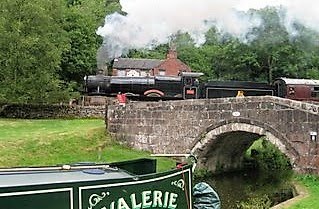
NB Valerie & Steam Train by Les Biggs


.jpg)
.jpg)
.jpg)
.jpg)
.jpg)


.jpg)

.jpg)


.jpg)
.jpg)
.jpg)

.jpg)


.jpg)